veteran goalkeepers extending careers through elite reflex metrics can preserve and improve split-second reactions by using repeatable reflex tests, targeted low-volume drills, wearable monitoring, and prioritized sleep/nutrition to guide load adjustments and reduce injury risk.
veteran goalkeepers extending careers through elite reflex metrics can regain precious milliseconds with focused testing and drills. Quer saber quais métricas realmente importam e como treinar com segurança? Vamos ver protocolos práticos, exemplos e cuidados.
Measuring reflex performance: the tests that matter
veteran goalkeepers extending careers through elite reflex metrics benefit most from clear, repeatable tests that track tiny gains. Simple measures guide safe, focused training.
Below are the key tests, how to run them, and what the numbers really mean for your sessions.
lab tests: reaction time and decision speed
Lab tests isolate the nervous system. A light or sound triggers a single response. These tests give a clean measure of latency.
Choice-reaction setups add decision demands. The keeper must choose left, right, or center, so the test reflects real-game thinking.
field tests: timing, anticipation, and movement
Field tests bring sport context. Use ball machines, live shooters, or occlusion glasses to test reading skills and timing. These drills link perception to action.
- Simple reaction test — respond to one light or beep; records baseline response time.
- Choice reaction test — multiple cues require a correct directional response; measures processing plus action.
- Occlusion or strobe drills — reduce visual info to test prediction and timing under uncertainty.
- Wearable sensor trials — measure dive velocity, setup time, and latency with inertial sensors.
When you collect data, aim for consistency. Run each test 3–5 times and take the median. Small day-to-day swings happen; look for trends over weeks.
Know the metrics: simple reaction time (ms), decision time (ms), movement onset (ms), and peak velocity (m/s). Track each separately to see where to target work.
Use moving averages and a minimal detectable change to flag real improvement. For older keepers, even a 5–10% gain in decision time can feel huge on the field.
Combine tests. Lab numbers show neural latency. Field tests show transfer to match actions. Together they tell you whether drills improve both speed and game timing.
practical testing tips for veteran keepers
Test when rested and use the same setup each time. Keep warm-up standard, control lighting, and log sleep and fatigue.
Work with a coach or tech person to sync sensors and video. Simple notes help interpret odd results after travel or heavy load.
Prioritize safety. If reaction work increases soreness or risk, reduce volume and focus on technique or recovery.
veteran goalkeepers extending careers through elite reflex metrics should use tests not as an end, but as a guide to smarter training and recovery.
In short, pick a small test battery, run it consistently, and use clear thresholds to guide drills. That approach turns raw numbers into real on-field gains.
Drills and routines to sharpen split-second reactions
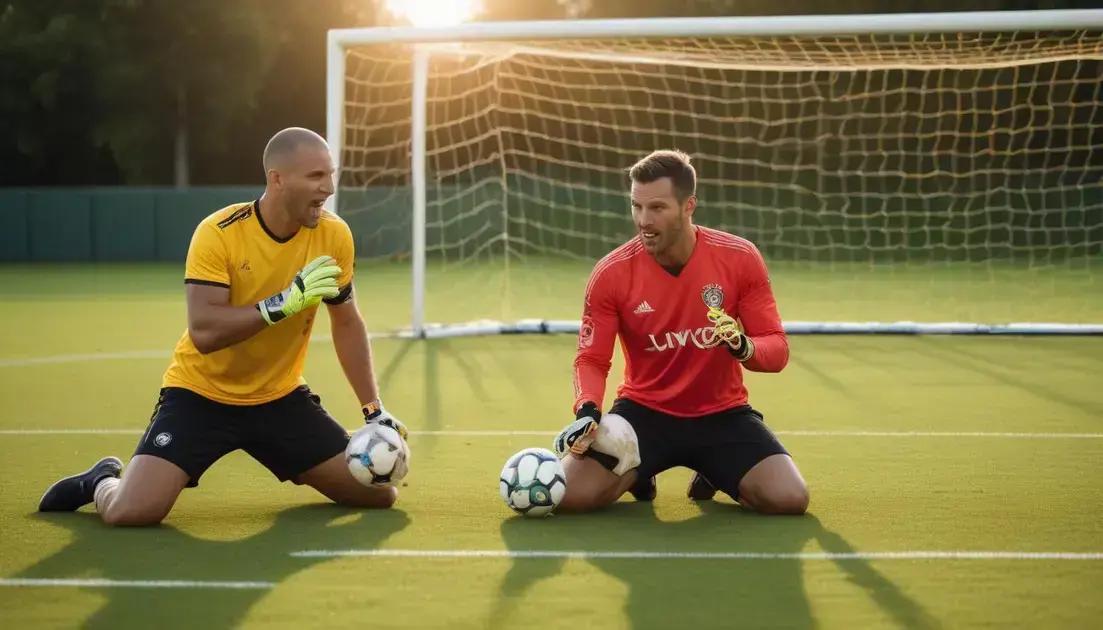
veteran goalkeepers extending careers through elite reflex metrics benefit from drills that train speed, timing, and decision-making without excess load.
These routines mix simple reaction work with game-like choices to keep gains relevant to match play.
quick reaction drills to improve raw speed
Start with short, high-quality reps that target pure response time. Use a light board, single beep, or coach cue and respond immediately.
Keep sets brief: 6–10 reps, full recovery between attempts. Focus on clean technique and explosive first step.
decision-making drills that mimic match demands
Add choice into drills so the keeper practices reading cues and committing quickly. Vary direction, height, and spin.
- two-color light board — react left or right to colored lights; mix timing to avoid anticipation.
- randomized shot routine — coach or machine alternates placement and pace without warning.
- occlusion practice — use brief vision blocks or strobe glasses to train prediction.
- partner surprise drops — teammate releases balls from different angles for unpredictable saves.
Alternate single-choice drills with complex patterns across a session. This preserves speed while building decision skill.
Keep volume moderate. For veterans, quality beats quantity. Short, focused blocks reduce fatigue and lower injury risk.
progression, load management, and simple metrics
Track small, reliable metrics: reaction time (ms), movement onset, and dive velocity. Log the best of 3–5 reps each day.
Progress by tightening time windows or adding decision branches. If times worsen, back off and check recovery factors.
Wearables help spot trends. A wrist IMU or chest sensor gives numbers you can trust between sessions.
Pair drills with mobility and plyometrics to keep the body ready for explosive moves without heavy joint stress.
Use clear rest days and light sessions after travel or matches. Sleep and nutrition matter for neural recovery.
veteran goalkeepers extending careers through elite reflex metrics should view drills as measured experiments: train, test, adjust. That approach keeps reactions sharp while protecting long-term health.
Recovery, sleep and nutrition for older keepers
veteran goalkeepers extending careers through elite reflex metrics need smart recovery, sleep, and nutrition plans to keep reflexes sharp and joints healthy.
This section gives clear, practical steps you can use the next day after training or on rest days.
sleep strategies for neural recovery
Prioritize 7–9 hours of quality sleep to support reaction speed and decision making. Stick to a regular bedtime and wake time, even on weekends.
Short naps (15–30 minutes) can boost alertness without ruining nighttime sleep. Avoid late caffeine and heavy meals near bedtime.
nutrition that supports fast reactions
Fuel the brain and muscles with steady carbs, lean protein, and healthy fats. Timing matters: a small carb–protein snack 30–60 minutes after intense sessions aids recovery.
- balanced meals — whole grains, vegetables, lean protein, and omega-3 sources like fish or walnuts.
- hydration — start hydrated and replace fluids during long sessions; even mild dehydration slows reaction time.
- timed snacks — a yogurt or toast with peanut butter after training helps glycogen and repair.
- caffeine smartly — low to moderate caffeine before training can sharpen alertness, but avoid late use close to sleep.
Keep portions moderate. For veteran keepers, steady energy beats extreme diets that risk energy crashes or poor recovery.
Supplements like vitamin D, magnesium, or omega-3s can help if deficiencies exist. Check with a sports dietitian before starting anything new.
active recovery and body care
Include low-impact movement, mobility work, and targeted strength to protect joints while keeping power.
Light aerobic sessions, foam rolling, and guided stretching speed tissue recovery and keep range of motion ready for explosive saves.
Use contrast therapy or short cold baths after very intense load, but avoid daily ice if you need inflammation for adaptation. Manual therapy or massage can ease soreness and improve sleep quality.
Mind simple pacing: reduce high-volume sprint or jump work the day after demanding reaction sessions to lower injury risk.
monitoring and simple metrics
Track recovery with easy metrics: sleep hours, resting heart rate, HRV, subjective readiness, and reaction-time test results.
- sleep log — hours and sleep quality notes.
- readiness score — simple scale from 1–10 for fatigue and soreness.
- reaction tests — short weekly checks to spot trends in milliseconds.
- hydration and weight — quick daily checks to avoid performance dips.
Use trends rather than single values. If reaction times worsen or readiness drops, prioritize sleep and easy recovery before pushing intensity.
veteran goalkeepers extending careers through elite reflex metrics should view recovery, sleep, and nutrition as part of the training system—small, consistent habits keep reflexes fast and bodies resilient.
Data, wearables and analytics to prolong peak form
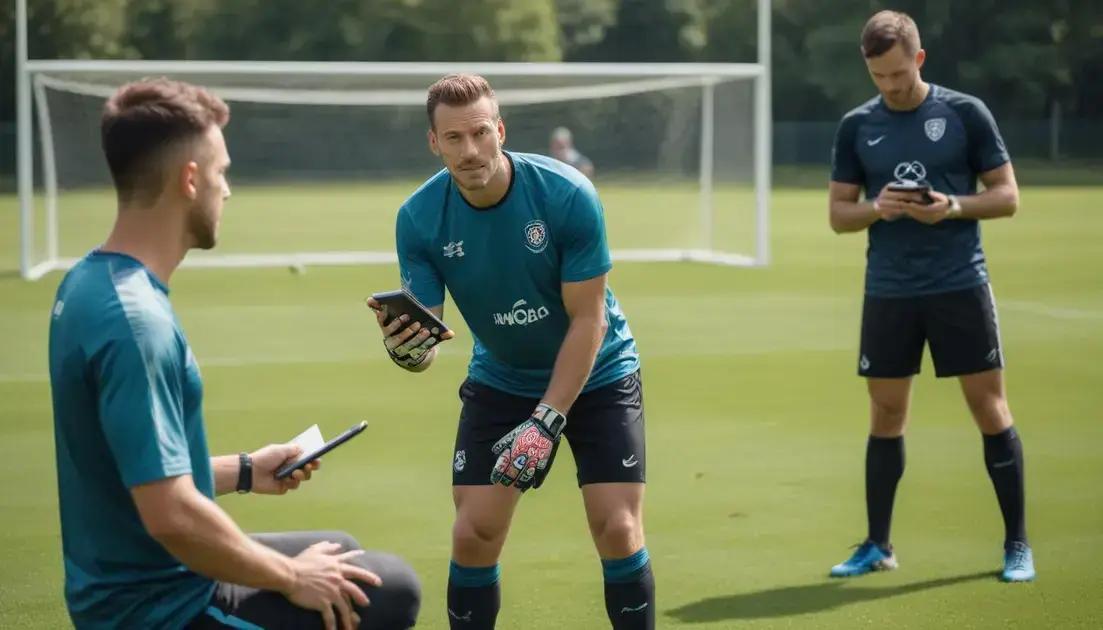
veteran goalkeepers extending careers through elite reflex metrics get the biggest gains when wearables and analytics turn raw numbers into clear actions. Smart data helps you train less and improve more.
This section explains devices, key metrics, and simple ways to use data without overcomplicating your routine.
common wearables and what they measure
Small sensors and smart clothing capture motion and physiology. Choose tools that are proven and easy to use on the pitch.
- inertial measurement units (IMUs) — capture dive velocity, movement onset, and limb acceleration.
- heart rate and HRV monitors — show cardiovascular strain and recovery state.
- sleep and activity trackers — log sleep hours, naps, and daily load.
- pressure insoles and GPS — measure jump force, step load, and positional work.
These devices give complementary views: neural speed, physical load, and recovery status. Use a small, consistent set that fits your staff and budget.
data quality, syncing, and validation
Good data starts with consistent setup. Place sensors the same way each test and record under similar conditions.
Sync wearables with video or a tablet to match events. That helps link a slow reaction time to a specific moment in training or a missed save.
- standardize placement — same strap, same side, same tightness.
- repeat tests — run 3–5 reps and use the median to reduce noise.
- cross-check with video — verify odd values before changing training loads.
Trust trends, not single readings. Small daily swings are normal. Look for consistent improvement or decline over weeks.
Also validate devices periodically. A cheap sensor is fine for trends but should be compared to a lab test or trusted unit before major decisions.
build simple dashboards and actionable alerts
Coaches need clear signals. Dashboards should highlight a few key metrics and show if a player is within safe ranges.
- trend line — 7–14 day moving average for reaction time and readiness.
- threshold alerts — notify when HRV drops or reaction time worsens by a set percent.
- context tags — note travel, sleep loss, or match day to explain outliers.
- actionable notes — link a metric change to a concrete step, like reducing high-load drills.
Keep visuals simple: numbers, arrows, and short recommendations. Avoid raw data dumps that nobody reads.
Use the data to guide training dose, not to punish. If metrics show fatigue, swap hard reaction drills for light technique or recovery work.
Start small: pick 2–3 metrics that match your goals. For reflex work, focus on reaction time, movement onset, and readiness.
Data works best when combined with coach judgment and player feedback. Discuss trends with the player and set clear, short-term targets.
veteran goalkeepers extending careers through elite reflex metrics benefit most from a measured, practical approach: reliable devices, simple analytics, and clear actions that protect health while boosting performance.
veteran goalkeepers extending careers through elite reflex metrics can protect and sharpen their reflexes with measured testing, targeted drills, and smart recovery. Track a few clear metrics with simple wearables, keep sessions short and high quality, and prioritize sleep and nutrition. Small, consistent steps add up to real gains and help sustain a longer career.
FAQ – veteran goalkeepers and elite reflex metrics
What tests should veteran goalkeepers use to track reflex improvements?
Use a small battery: simple reaction, choice-reaction, occlusion/strobe drills, and wearable sensor trials. Run 3–5 reps, record the median, and track weekly trends.
How often should I do reflex drills without risking injury?
Do short, high-quality reflex sessions 2–3 times per week with full recovery between sets. Prioritize technique over volume and reduce intensity after matches or heavy load.
Which metrics matter most and how do I interpret them?
Focus on reaction time, decision time, movement onset, and peak velocity, plus HRV/readiness. Watch trends over weeks; a 5–10% shift is meaningful.
Can wearables really help extend my career?
Yes, when used simply: they monitor load, reveal fatigue, and guide recovery decisions. Combine data with coach insight and player feedback rather than relying on raw numbers alone.