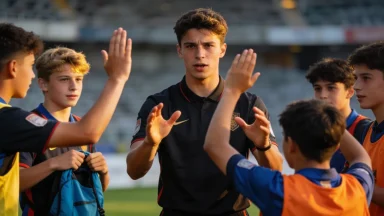
The Mental Game: 3 Practical Solutions for US Soccer Players to Enhance Performance by 10% Under Pressure
In the high-octane world of professional and semi-professional soccer, physical prowess and technical skill are undeniably crucial. However, the true differentiator, the elusive 10% edge that separates good from great, often lies within the realm of the mind. For US soccer players, navigating the intense pressure of competition, the scrutiny of fans, and the demands of coaches requires more than just athletic ability; it demands an ironclad mental game. Recent advancements in sports psychology offer a wealth of practical solutions to cultivate this mental toughness, enabling players to not only perform consistently but to truly thrive when the stakes are highest.
This article delves into three highly effective, science-backed strategies that US soccer players can immediately integrate into their training and game-day routines. These aren’t abstract concepts but actionable techniques designed to build resilience, sharpen focus, and optimize performance under pressure. By understanding and applying these principles, players can unlock their full potential, translating mental fortitude into tangible on-field success. The goal is clear: to equip American soccer talent with the psychological tools necessary to elevate their game by a significant margin, making that crucial 10% difference in critical moments.
Understanding the Pressure Cooker: Why Mental Toughness Matters for US Soccer Players
The landscape of US soccer is evolving rapidly. With increasing investment, rising talent, and a growing global presence, the expectations placed on players are higher than ever. From youth academies to the MLS and the national teams, every pass, every shot, every decision is magnified. This intense environment creates a unique ‘pressure cooker’ where mental resilience isn’t just a bonus, but a necessity. The ability to perform under pressure is what distinguishes a good player from an elite one, especially when the game is on the line.
Think about a penalty shootout in a championship game, a crucial defensive stop in the dying minutes, or maintaining composure after a missed opportunity. These moments aren’t just physical tests; they are profound psychological battles. A player’s mental state can dictate whether they execute flawlessly or crumble under the weight of expectation. This is where soccer mental performance becomes the bedrock of success. It encompasses a range of psychological skills, including emotional regulation, concentration, confidence, and resilience, all of which are vital for sustained excellence.
Recent studies in sports psychology consistently highlight the direct correlation between mental preparation and athletic output. For instance, research published in the Journal of Sport Psychology in Action indicates that athletes who consistently practice mental skills training report higher levels of self-efficacy and demonstrate improved performance stability in high-pressure situations. For US soccer players, integrating these insights isn’t just about gaining an advantage; it’s about leveling up in a competitive global sport where every edge counts. Ignoring the mental aspect is akin to training only one leg – it leaves a significant part of your potential untapped.
The physical demands of soccer are immense, but the mental demands can be even more taxing. Fatigue, mistakes, opponent tactics, and even crowd noise can all contribute to mental strain. Without robust mental strategies, players can experience performance anxiety, loss of focus, and decreased decision-making ability. This cascade effect can lead to errors, missed opportunities, and ultimately, undermine individual and team success. Therefore, understanding and actively developing soccer mental performance is not merely an optional add-on; it is an indispensable component of comprehensive player development.
This article aims to bridge the gap between theoretical sports psychology and practical application, offering tangible tools that coaches, trainers, and individual players can use. By focusing on these three solutions, US soccer players can begin to systematically build the mental fortitude required to not only withstand pressure but to leverage it as a catalyst for superior performance. The goal is to move beyond simply reacting to pressure and instead to proactively manage and master it, turning potential pitfalls into opportunities for brilliance.
Solution 1: Mastering Emotional Regulation Through Mindfulness and Breathing Techniques
One of the most immediate impacts of pressure is its effect on a player’s emotional state. Anxiety, frustration, anger, or even over-excitement can disrupt focus, impair decision-making, and lead to technical errors. Effective emotional regulation is therefore paramount for consistent soccer mental performance. Mindfulness and controlled breathing techniques offer powerful, scientifically validated tools to achieve this.
What is Mindfulness?
Mindfulness, in the context of sport, is the practice of bringing one’s attention to the present moment, without judgment. This means being fully aware of your thoughts, feelings, and bodily sensations as they occur, rather than getting swept away by them. For a soccer player, this could mean focusing entirely on the feel of the ball, the sound of your teammates, or the specific task at hand, rather than dwelling on a past mistake or worrying about the game’s outcome. Studies have shown that mindfulness training can reduce anxiety, improve focus, and enhance emotional control in athletes. By regularly practicing mindfulness, players can learn to observe their emotions without being consumed by them, allowing for a more measured and effective response to stressful situations.
The Power of Controlled Breathing
Closely linked to mindfulness are controlled breathing techniques. When under pressure, the body’s natural ‘fight or flight’ response kicks in, often leading to shallow, rapid breathing. This physiological change can exacerbate anxiety, increase muscle tension, and impair cognitive function. Conversely, slow, deep, diaphragmatic breathing activates the parasympathetic nervous system, promoting relaxation and clarity. This is not just anecdotal; neuroscience confirms that controlled breathing can directly influence heart rate variability, a key indicator of stress resilience.
A simple yet highly effective technique is the ‘4-7-8 breathing’ method: inhale deeply through your nose for 4 seconds, hold your breath for 7 seconds, and exhale completely through your mouth for 8 seconds. Repeating this cycle several times can significantly reduce immediate stress and bring a sense of calm. Integrating such breathing exercises into pre-game routines, during breaks in play, or even after a mistake, can help players reset their emotional state and regain composure. This proactive approach to emotional management is a cornerstone of robust soccer mental performance.
For US soccer players, practicing mindfulness and controlled breathing daily, even for just 5-10 minutes, can yield profound benefits. It teaches the mind to stay anchored in the present, preventing distractions from past errors or future anxieties. During a game, this translates to better decision-making, improved reaction times, and the ability to maintain composure even in the most chaotic moments. It’s about taking control of your internal state, rather than letting external pressures dictate your performance.
Coaches can facilitate this by incorporating short mindfulness sessions or breathing exercises into warm-ups or cool-downs. Encouraging players to use these techniques during training drills, especially those designed to simulate game pressure, can help integrate them into their muscle memory. The aim is to make emotional regulation an automatic response, a skill as ingrained as dribbling or passing.
Solution 2: Harnessing Visualization and Imagery for Peak Performance
Beyond managing immediate emotions, elite athletes consistently employ proactive mental strategies to prepare for and execute under pressure. Visualization and imagery are powerful cognitive tools that allow players to mentally rehearse scenarios, refine skills, and build confidence before they even step onto the field. This mental preparation is a critical component of optimizing soccer mental performance.
What is Visualization and Imagery?
Visualization involves creating vivid mental pictures of successful performance. Imagery goes a step further, engaging all senses – what you see, hear, feel, and even smell – to simulate the experience as realistically as possible. For a soccer player, this could mean mentally playing through a critical sequence: seeing yourself receiving a pass, hearing the crowd roar, feeling the ball connect perfectly with your foot, and watching it curve into the top corner of the net. The brain, to a significant extent, processes imagined actions similarly to real ones, meaning that mental practice can actually strengthen neural pathways associated with specific movements and decisions.
How to Implement Visualization for Soccer Players
- Goal-Oriented Imagery: Before a game, spend 5-10 minutes visualizing key plays or situations you anticipate. See yourself successfully executing passes, tackles, shots, or defensive blocks. Focus on the feeling of success and the positive outcome.
- Skill Rehearsal: If you’re working on a specific technical skill, such as a new dribbling move or a particular type of shot, mentally rehearse it repeatedly. Imagine performing it perfectly, breaking down each step of the movement. This ‘mental reps’ can complement physical practice and accelerate skill acquisition.
- Coping with Adversity: Visualize challenging scenarios, such as making a mistake or falling behind. Then, mentally rehearse your ideal response: staying calm, refocusing, and bouncing back stronger. This prepares you emotionally and cognitively for setbacks, building resilience.
- Pre-Game Routine: Integrate visualization into your warm-up. As you stretch or do light drills, spend a minute or two visualizing your role in the upcoming game, your contributions, and the team’s overall success.
The effectiveness of visualization is well-documented in sports psychology. A meta-analysis published in Psychology of Sport and Exercise concluded that imagery interventions significantly enhance athletic performance across various sports. For US soccer players, this means that dedicating time to mental rehearsal is not just a ‘nice to have’ but a ‘must-have’ strategy for continuous improvement and maintaining a competitive edge. It builds self-efficacy, reduces anxiety by familiarizing players with game situations, and helps in automatic execution under pressure.
Coaches should educate players on the science behind visualization and provide structured opportunities for its practice. Simple prompts or guided imagery scripts can be incredibly helpful, especially for younger players. Emphasizing the sensory details during visualization – the smell of the grass, the feel of the jersey, the sound of the whistle – makes the experience more real and thus more effective in programming the mind for success. By consistently engaging in visualization, US soccer players can proactively shape their soccer mental performance, ensuring they are mentally prepared for whatever the game throws at them.
Solution 3: Developing a Robust Pre-Performance Routine and Self-Talk Strategy
Consistency is key in elite sports, and much of that consistency stems from reliable routines and internal dialogue. For US soccer players, establishing a robust pre-performance routine and cultivating positive, constructive self-talk are indispensable tools for enhancing soccer mental performance and ensuring peak execution, especially when the pressure mounts.
The Power of Pre-Performance Routines
A pre-performance routine is a sequence of thoughts and actions consistently performed before a specific skill or event. Its purpose is to help athletes enter an optimal performance state, reduce anxiety, and improve focus. For soccer players, this could range from a routine before a penalty kick, a free-kick, or even before stepping onto the field for the first half.
Components of an Effective Routine:
- Physical Cues: Specific stretches, dynamic movements, or even touching certain parts of your gear.
- Mental Cues: A moment of mindfulness, a quick visualization, or a positive affirmation.
- Breathing Control: Incorporating a few deep, controlled breaths to regulate heart rate and calm nerves.
- Focus Statement: A short, sharp phrase that brings attention to the immediate task.
For example, before a penalty kick, a player might take three deep breaths, visualize the ball hitting the back of the net, and then repeat a personal mantra like, “Stay calm, strike true.” This structured approach minimizes overthinking and allows the player to enter an automatic, confident state. Research indicates that consistent routines lead to greater stability in performance, particularly under high-pressure conditions, by enhancing feelings of control and reducing cognitive interference.
Cultivating Positive Self-Talk
Self-talk refers to the internal monologue or dialogue we have with ourselves. It can be instructional (e.g., “Keep your eye on the ball”) or motivational (e.g., “You’ve got this”). The quality of this self-talk profoundly impacts confidence, effort, and persistence. Negative self-talk (“I always mess this up,” “Don’t make a mistake”) can be debilitating, leading to increased anxiety and reduced performance.
Strategies for Effective Self-Talk:
- Awareness: The first step is to become aware of your current self-talk patterns. Are they predominantly positive or negative?
- Thought Stopping: When you catch yourself engaging in negative self-talk, consciously stop it. You can even use a physical cue, like snapping a rubber band on your wrist, to interrupt the thought pattern.
- Reframing: Replace negative thoughts with positive, actionable ones. Instead of “Don’t miss,” try “Focus on the target.” Instead of “I’m tired,” try “I can push through this.”
- Affirmations: Use short, positive statements about your abilities and goals. “I am strong and focused,” “I trust my training.”
- Instructional Cues: Use self-talk to remind yourself of technical points during a game. “Open hips,” “Follow through.”
The integration of positive self-talk into a player’s mental toolkit is a cornerstone of robust soccer mental performance. It builds self-belief, maintains focus, and helps players recover quickly from errors. For US soccer players, who often face intense scrutiny, mastering self-talk is crucial for maintaining a resilient mindset throughout a demanding season.
Coaches can encourage players to identify their common negative self-talk patterns and work on replacing them. Team discussions about the power of self-talk and shared positive affirmations can also foster a supportive mental environment. By combining structured pre-performance routines with a disciplined approach to positive self-talk, US soccer players can create a powerful psychological framework that supports consistent, high-level performance under any circumstances, truly making that 10% difference.
Integrating Mental Training into Daily Soccer Practice
Implementing these mental strategies isn’t a one-off event; it requires consistent, deliberate practice, just like physical and technical training. For US soccer players and their coaches, the key lies in seamlessly integrating mental conditioning into daily routines and understanding that soccer mental performance is an ongoing journey, not a destination.
Coaches as Facilitators of Mental Toughness
Coaches play a pivotal role in fostering a mentally strong environment. They can:
- Educate: Provide players with resources and knowledge about sports psychology. Explain the ‘why’ behind mental training.
- Model: Demonstrate composure and positive self-talk themselves, especially in challenging situations.
- Incorporate Drills: Design training drills that intentionally simulate pressure situations, encouraging players to practice their mental skills (e.g., penalty shootouts at the end of a tiring session, small-sided games with high stakes).
- Debrief: After training sessions and games, discuss not just physical and technical performance, but also mental responses. Ask questions like, “How did you manage frustration after that mistake?” or “What did you say to yourself before that critical pass?”
- Provide Feedback: Offer specific feedback on mental skills development, just as they would for technical skills.
- Encourage Individualization: Recognize that each player’s mental game is unique. Help players identify which strategies work best for them.
Player Responsibility and Self-Application
Ultimately, the responsibility for mental growth rests with the individual player. They must be proactive in:
- Daily Practice: Dedicate specific time each day to mindfulness, visualization, and positive self-talk, even if it’s just 5-10 minutes. This could be part of a morning routine or before bed.
- Self-Monitoring: Pay attention to their thoughts and emotions during training and games. Keep a mental journal to track patterns and identify areas for improvement.
- Seeking Support: Don’t hesitate to consult with sports psychologists or mental performance coaches if they feel stuck or need personalized guidance.
- Consistency: The benefits of mental training accumulate over time. Regularity is more important than intensity.
By making mental training a non-negotiable part of their development, US soccer players can build a resilient mindset that withstands the rigors of competition. This holistic approach ensures that physical, technical, and mental aspects of the game evolve in tandem, creating a more complete and formidable athlete. The 10% performance enhancement under pressure isn’t a magical leap; it’s the cumulative result of consistent effort in all dimensions of the game, with a strong emphasis on the often-underestimated power of the mind.
The Future of US Soccer: A Mentally Fortified Generation
The journey to becoming an elite US soccer player is multifaceted, demanding relentless dedication to physical conditioning, technical mastery, and tactical intelligence. However, as the sport continues to evolve and the margins between victory and defeat narrow, the significance of the mental game has never been more pronounced. The three practical solutions outlined – mastering emotional regulation through mindfulness and breathing, harnessing visualization and imagery, and developing robust pre-performance routines and self-talk strategies – are not just theoretical concepts. They are actionable, evidence-based tools that can empower US soccer players to transcend their current limitations and truly excel under pressure.
By embracing these modern approaches from sports psychology, players can cultivate a deeper understanding of their own minds, learn to control their reactions, and proactively prepare for the challenges of competition. This isn’t about eliminating pressure; it’s about transforming it from a debilitating force into a powerful motivator. It’s about building a mental fortress that allows technical skills to shine through, even in the most intense moments. The 10% performance enhancement under pressure is a realistic and achievable goal for those committed to developing their soccer mental performance.
The investment in mental training is an investment in sustained success, both individually and collectively. For coaches, this means integrating mental skills into every facet of training. For players, it means taking ownership of their psychological development with the same fervor they apply to their physical training. As US soccer continues its ascent on the global stage, a generation of mentally fortified players will be its greatest asset. These are the athletes who will make the critical plays, convert the decisive opportunities, and lead their teams to glory, demonstrating that the strongest muscles in soccer are often found between the ears.
Embrace the mental game, and unlock your true potential on the pitch. The future of US soccer is not just about stronger bodies and faster feet; it’s about sharper minds and unshakeable resolve.