This article delves into the meticulous training routines of six legendary goalkeepers, providing unparalleled insight into their comprehensive physical, mental, and tactical preparations for the upcoming 2026 soccer season.
As the 2026 season rapidly approaches, the spotlight intensifies on the unsung heroes between the posts. Understanding the intricate and often grueling goalkeeper training regimens of these elite athletes offers a unique perspective into the dedication required to perform at the highest level. This deep dive will reveal the tactical nuances, physical demands, and psychological fortitude cultivated by six iconic goalkeepers to ensure they are at their peak when the whistle blows.
The Evolution of Goalkeeper Training: Beyond Shot-Stopping
The role of a goalkeeper has dramatically evolved. No longer are they solely judged by their ability to stop shots; modern goalkeepers are integral to build-up play, command the defense, and possess exceptional distribution skills. This transformation means their training regimens have become more comprehensive, incorporating elements that address every facet of their expanded responsibilities.
The emphasis has shifted from purely reactive drills to proactive, integrated training that mirrors real-game scenarios. This holistic approach ensures goalkeepers are not just physically prepared but also mentally sharp and tactically aware, capable of influencing the game from their unique vantage point.
Integrated Physical Conditioning
Modern physical conditioning for goalkeepers goes far beyond basic cardio and strength. It’s about developing explosive power, agility, and endurance specific to their position.
- Explosive Power: Drills focusing on vertical and horizontal jumps, plyometrics, and short bursts of speed are crucial for quick reactions and powerful dives.
- Agility and Footwork: Ladder drills, cone work, and shuttle runs enhance quick directional changes and efficient movement within the box.
- Core Strength: A strong core is fundamental for stability, powerful throws, and injury prevention, with exercises like planks, Russian twists, and medicine ball rotations being staples.
Tactical Acumen and Ball Distribution
Goalkeepers are now often the first attackers, initiating plays with precise distribution. Training sessions increasingly include drills focused on their passing range, decision-making under pressure, and understanding of team tactics.
- Passing Accuracy: Long and short-range passing drills, both with feet and hands, to hit targets accurately under various pressures.
- Decision-Making: Scenario-based drills where goalkeepers must quickly decide whether to pass short, long, or dribble, simulating game situations.
- Game Reading: Video analysis sessions and on-field positional play to better anticipate opponent movements and understand defensive structures.
The modern goalkeeper’s training is a testament to the sport’s continuous evolution. It demands a blend of traditional goalkeeping skills with the athletic and tactical prowess of an outfield player, preparing them to be complete athletes and critical playmakers.
Manuel Neuer: The Sweeper-Keeper’s Blueprint
Manuel Neuer, often credited with redefining the sweeper-keeper role, continues to set the gold standard for goalkeeping. His preparation for the 2026 season is a meticulous blend of technical refinement, physical conditioning, and tactical intelligence, ensuring he maintains his unparalleled command of the penalty area and beyond.
Neuer’s training emphasizes quick decision-making under pressure, particularly in situations where he acts as an auxiliary defender. His sessions involve high-intensity drills that simulate defensive clearances, one-on-one challenges outside the box, and rapid transition play, all while maintaining supreme shot-stopping capabilities.
Agility and Positional Play
A significant portion of Neuer’s regimen focuses on enhancing his agility and understanding of positional play, crucial for his sweeper-keeper role. These drills are designed to improve his reaction time and ability to cover vast areas of the pitch.
- Rapid Footwork Drills: Quick-step exercises and lateral movements across the goal line, often incorporating small hurdles or cones to improve foot speed.
- Off-the-Line Interceptions: Drills simulating through balls and long passes, requiring Neuer to rush out of his box, judge the ball’s trajectory, and execute precise clearances or interceptions.
- Distribution Under Pressure: Practicing long-range passes and accurate throws to wide players or midfielders, often with immediate pressure from attacking dummies or assistant coaches.
Recovery and Injury Prevention
Given his long and demanding career, Neuer places immense importance on recovery and injury prevention. His program includes specific exercises aimed at maintaining joint health and muscle elasticity, crucial for longevity.
- Dynamic Stretching and Mobility: Extensive pre- and post-training routines to improve flexibility and range of motion, particularly in hips, knees, and shoulders.
- Strength and Conditioning: Targeted exercises to strengthen stabilizing muscles around key joints, reducing the risk of strains and sprains inherent in goalkeeping movements.
- Cryotherapy and Hydrotherapy: Utilizing advanced recovery techniques to accelerate muscle repair and reduce inflammation, allowing for consistent high-intensity training.
Neuer’s regimen for 2026 is a testament to his dedication, combining groundbreaking tactical training with disciplined physical maintenance, allowing him to continue performing at an elite level.
Alisson Becker: The Brazilian Wall’s Integrated Approach
Alisson Becker, renowned for his calm demeanor, exceptional shot-stopping, and impressive distribution, approaches the 2026 season with a training philosophy centered on seamless integration. His regimen combines technical precision with high-intensity physical demands, mirroring the fast-paced nature of modern football.
His sessions are designed to enhance his all-around game, from making acrobatic saves to initiating quick counter-attacks with his accurate passing. Alisson’s training environment often includes small-sided games to keep his reflexes sharp and his decision-making honed under game-like pressure, emphasizing his role as both a defender and a crucial part of offensive transitions.
Reaction Time and Handling
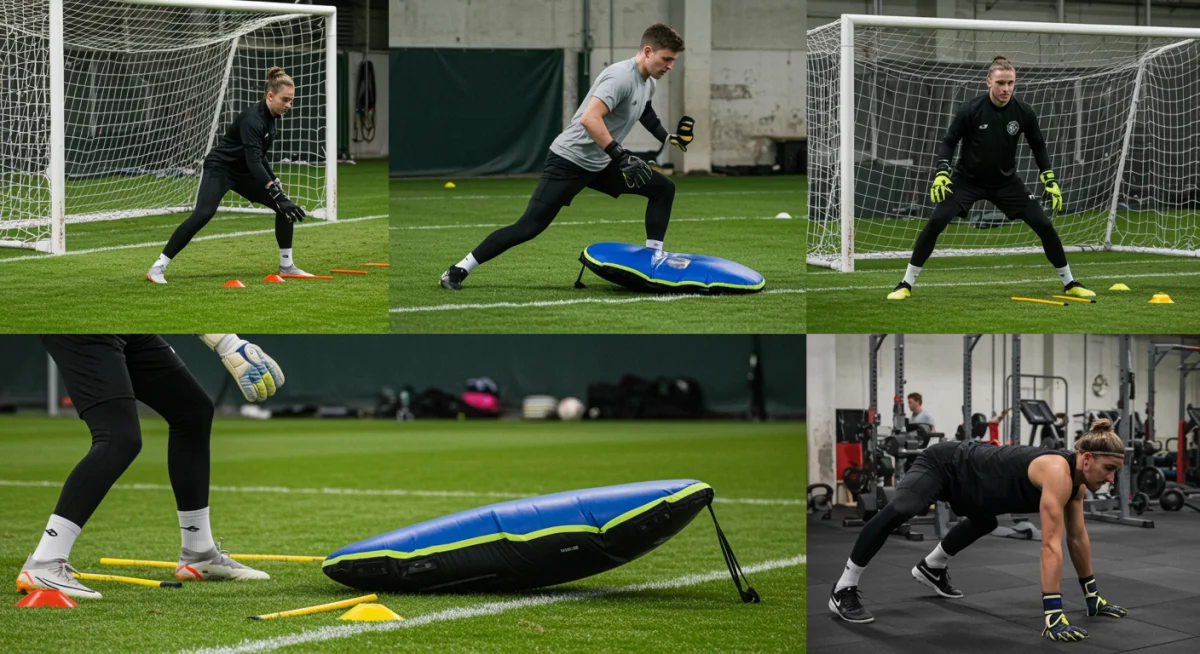
A core component of Alisson’s preparation involves drills specifically targeting his reaction time and superior ball-handling skills. These exercises are critical for his ability to make instinctual saves and secure the ball in crowded penalty areas.
- Close-Range Shot Stopping: Multiple shots fired from short distances and varying angles, forcing rapid adjustments and quick hand movements.
- Deflection Drills: Using rebound boards or deflecting shots off other players to simulate unpredictable ball trajectories, enhancing his ability to react to deflections.
- Cross and High Ball Training: Repetitive practice in claiming crosses and high balls under pressure, improving his aerial command and communication with defenders.
Mental Fortitude and Game Management
Beyond the physical, Alisson dedicates significant time to developing his mental strength and game management capabilities. This includes visualization techniques, tactical discussions, and stress inoculation drills to remain composed under intense pressure.
His training schedule ensures he is not only physically ready but also mentally prepared to lead his defense and make critical decisions throughout the 2026 season. Alisson’s holistic approach guarantees he remains one of the most reliable and influential goalkeepers in the world.
Thibaut Courtois: The Towering Presence’s Specialized Drills
Thibaut Courtois, known for his imposing stature and incredible reach, refines his game for 2026 with specialized drills that maximize his physical attributes while sharpening his technical prowess. His training regimen is tailored to exploit his height and wingspan, making him a formidable opponent in aerial duels and shot-stopping.
Courtois’s preparation focuses on maintaining his exceptional reflexes despite his height, ensuring he can get down quickly for low shots and command his box with authority. His program integrates dynamic stretches and explosive power exercises to enhance his agility without compromising his natural advantages.
Aerial Command and Shot Blocking
Given his physical frame, Courtois’s training heavily emphasizes aerial command and blocking shots from various angles. These drills are essential for his dominance in the penalty area.
- High Ball Collection: Repeated drills of catching and punching crosses from different flight paths, often with significant physical contact from opposition players (coaches).
- Angle Play and Spreading: Exercises focusing on narrowing the angle for approaching forwards, requiring precise positioning and the ability to spread his body effectively to block shots.
- Reaction to Close-Range Headers: Quick reflex drills to save powerful headers from within the six-yard box, demanding rapid hand-eye coordination.
Flexibility and Agility for Tall Keepers
Counteracting the common challenges faced by taller goalkeepers, Courtois incorporates specific exercises to maintain flexibility and improve his ability to get down quickly for low shots.
His regimen is a masterclass in leveraging natural gifts while diligently addressing potential weaknesses, ensuring he remains a top-tier goalkeeper for the 2026 season.
Jan Oblak: The Master of Position and Anticipation
Jan Oblak, celebrated for his exceptional positioning and uncanny ability to anticipate shots, prepares for the 2026 season with a training regimen that hones these core strengths. His approach is less about flashy saves and more about being in the right place at the right time, making difficult saves look routine.
Oblak’s training focuses on intense visual and spatial awareness drills, coupled with reaction exercises that mimic game situations. He spends considerable time studying opponent tendencies and shot patterns, allowing him to predict where the ball will go before it’s even struck.
Visual Training and Anticipation
A key aspect of Oblak’s training involves enhancing his visual processing and anticipatory skills. This allows him to react proactively rather than reactively, often saving shots that others might not even reach.
- Ball Tracking Drills: Following the ball’s trajectory from the moment it leaves a player’s foot, often with distractions or multiple balls in play.
- Shot Prediction Scenarios: Drills where coaches vary shot types (power, placement, curl) and Oblak must quickly read body language and anticipate the shot’s direction.
- Peripheral Vision Exercises: Training to maintain awareness of players and movement within his peripheral vision while focusing on the ball.
Consistent Technical Execution
Oblak’s regimen also emphasizes consistent technical execution of fundamental goalkeeping skills, ensuring perfection in every catch, parry, and dive.
His preparation for 2026 is a testament to the power of meticulous preparation and an almost scientific approach to goalkeeping, ensuring his continued dominance through superior positioning and anticipation.
Marc-André ter Stegen: The Modern Ball-Playing Goalkeeper
Marc-André ter Stegen, a paragon of the modern ball-playing goalkeeper, fine-tunes his skills for the 2026 season with a regimen that equally prioritizes his shot-stopping ability and his crucial role in build-up play. His training reflects the demands of a team that often plays out from the back, requiring exceptional footwork, vision, and composure under pressure.
Ter Stegen’s sessions are dynamic, involving complex passing sequences, tactical positioning drills that facilitate offensive transitions, and intense reaction training to maintain his high standards as a shot-stopper. He is essentially an eleventh outfield player when his team is in possession.
Footwork and Distribution Prowess
The cornerstone of Ter Stegen’s training is his exceptional footwork and distribution. These drills are designed to make him comfortable and effective with the ball at his feet in any situation.
- Short and Long Passing Accuracy: Practicing precise passes to various targets across the pitch, often under tight time constraints and simulated defensive pressure.
- Receiving and Controlling: Drills to improve his first touch and ability to control difficult passes, setting him up for immediate distribution.
- Decision-Making in Build-Up: Scenario training where he must quickly assess options and choose the best pass to break lines or retain possession.
Reflexes and One-on-One Situations
Despite his emphasis on playing with his feet, Ter Stegen consistently works on his reflexes and ability to handle one-on-one challenges, ensuring he remains a complete goalkeeper.
Ter Stegen’s 2026 preparation exemplifies the evolving demands of top-tier goalkeeping, balancing traditional roles with the innovative requirements of modern football.
Ederson Moraes: Precision and Power from the Back
Ederson Moraes, celebrated for his unparalleled distribution and powerful kicking, gears up for the 2026 season with a training regimen that accentuates his unique strengths. His preparation is heavily focused on maintaining the precision and power that make him a key offensive weapon for his team, alongside his fundamental goalkeeping duties.
Ederson’s sessions often feature drills that simulate game-winning passes from his own penalty area, requiring accuracy over long distances and the ability to read the game to spot attacking opportunities. His physical conditioning supports this, ensuring he has the explosive power needed for those crucial kicks and throws.
Long-Range Distribution Mastery
A significant part of Ederson’s training is dedicated to perfecting his long-range distribution, a skill that often bypasses an opponent’s press and launches rapid counter-attacks.
- Goal Kicks and Punts: Repetitive practice of goal kicks and open-play punts to hit specific targets on the halfway line or beyond, often with varying wind conditions.
- Throwing Accuracy and Distance: Drills to maximize the distance and accuracy of his throws, turning defensive clearances into immediate attacking threats.
- Vision and Scanning: Training to quickly scan the field for open players and anticipate runs, enabling him to make game-changing passes.
Shot-Stopping and Adaptability
While known for his distribution, Ederson’s training for 2026 also ensures his shot-stopping remains top-notch, emphasizing adaptability to different types of shots and situations.
Ederson’s meticulous preparation for 2026 underscores his role as a pioneering goalkeeper, combining traditional shot-stopping with an extraordinary offensive contribution, setting a new benchmark for the position.
| Key Goalkeeper | Training Focus Highlight |
|---|---|
| Manuel Neuer | Sweeper-keeper role, rapid decision-making, and injury prevention. |
| Alisson Becker | Integrated approach, reaction time, handling, and mental fortitude. |
| Thibaut Courtois | Aerial command, shot blocking, and flexibility for tall keepers. |
| Jan Oblak | Superior positioning, anticipation, and consistent technical execution. |
Frequently Asked Questions About Goalkeeper Training
The modern goalkeeper is now an integral part of build-up play and defensive organization, not just a shot-stopper. They are expected to have excellent distribution skills, tactical awareness, and strong communication, effectively acting as an eleventh outfield player in possession.
Goalkeepers prioritize explosive power for dives and jumps, agility for quick movements, and core strength for stability and powerful throws. Endurance is also crucial to maintain high performance throughout an entire match and season without fatigue.
Mental training is paramount for elite goalkeepers. It includes visualization, stress inoculation, and tactical preparation to maintain composure under pressure, make split-second decisions, and lead the defense effectively. A strong mindset is as crucial as physical prowess.
Specialized distribution drills involve practicing short and long-range passes, goal kicks, and throws with high accuracy. These drills often simulate game pressure, requiring goalkeepers to quickly assess options and execute precise passes to initiate attacks or retain possession.
Recovery and injury prevention are managed through dynamic stretching, mobility exercises, targeted strength conditioning for stabilizing muscles, and advanced recovery techniques like cryotherapy and hydrotherapy. This proactive approach helps maintain peak physical condition and extend career longevity.
Conclusion
The journey to the 2026 season reveals that the preparation of iconic goalkeepers is a sophisticated, multi-faceted endeavor. Far from being one-dimensional shot-stoppers, these athletes engage in highly specialized goalkeeper training regimens that encompass physical conditioning, tactical intelligence, and unwavering mental fortitude. From Neuer’s sweeper-keeper innovations to Ederson’s revolutionary distribution, each goalkeeper’s routine is meticulously crafted to enhance their unique strengths while adapting to the evolving demands of modern soccer. Their dedication not only ensures their individual brilliance but also underscores the pivotal role they play in their teams’ success, continually pushing the boundaries of what it means to be a world-class goalkeeper.