
Football, often dubbed ‘the beautiful game,’ is in a constant state of evolution. Tactics shift, player profiles adapt, and the demands on athletes intensify with each passing season. As we look towards 2026, the midfield, arguably the most crucial area of the pitch, continues to be the battleground where games are won and lost. The modern midfielder is no longer a unidimensional player; instead, they are complex, multi-faceted athletes whose roles are defined by an intricate blend of technical prowess, tactical intelligence, and physical endurance. This comprehensive analysis dives deep into the world of elite midfielders 2026, dissecting the three key tactical roles that are set to dominate the game: the Orchestrating Playmaker, the Tenacious Destroyer, and the Dynamic Box-to-Box midfielder. We will explore the evolving requirements for each role, backed by a data-driven comparison of the performance metrics that distinguish the truly elite.
The Evolving Midfield Landscape: Why Roles Are More Defined Than Ever
The tactical fluidity of modern football means that while positions might seem static on a team sheet, the roles players undertake are anything but. The midfield, in particular, has seen a dramatic transformation. Gone are the days of simple defensive or offensive midfielders; today’s game demands specialists who can execute highly specific tasks while also possessing a foundational understanding of the broader tactical framework. The rise of advanced data analytics has played a pivotal role in this evolution, allowing coaches and scouts to identify, quantify, and optimize the contributions of each player. Understanding the nuances of these roles is not just for coaches and analysts; it’s essential for fans who want to truly appreciate the intricate ballet unfolding on the pitch.
The year 2026, with its impending major tournaments and continued technological advancements, promises to further solidify these specialized roles. Teams will continue to seek out and develop players who fit these molds perfectly, knowing that a finely tuned midfield is the engine of any successful side. Our focus on elite midfielders 2026 aims to provide a roadmap for understanding what makes these players indispensable.
The Orchestrating Playmaker: The Brains of the Operation
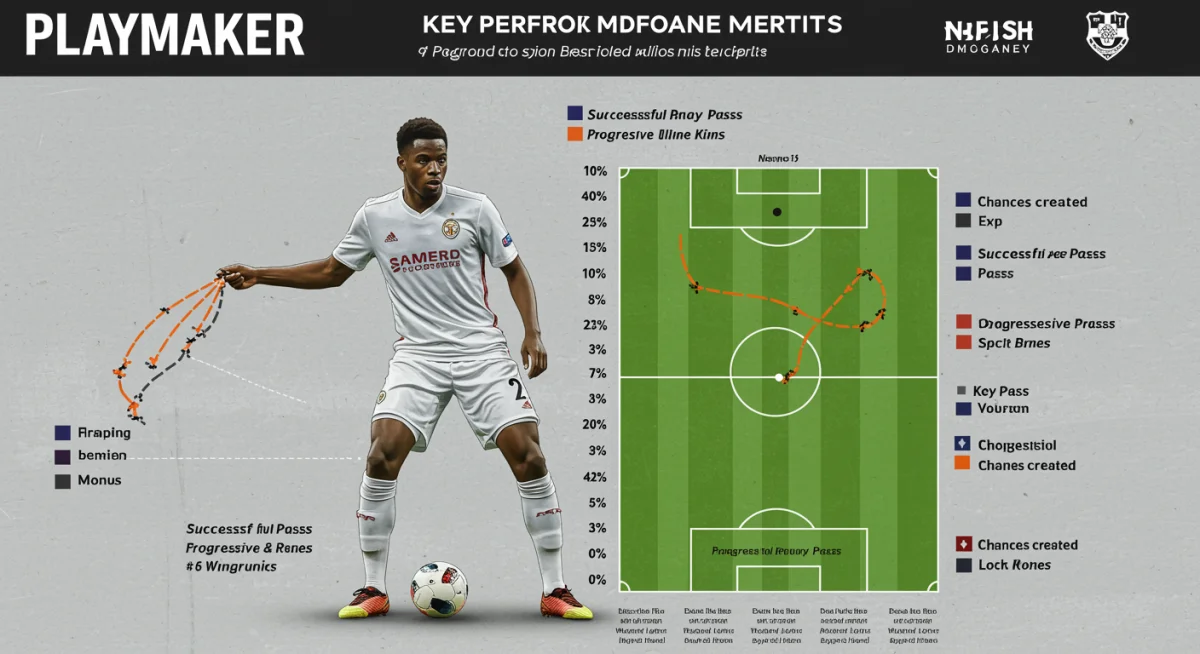
The Orchestrating Playmaker is the conductor of the team’s attack, the player who dictates the tempo, unlocks defenses, and creates goal-scoring opportunities. In 2026, this role demands not just vision and passing ability, but also exceptional spatial awareness, press resistance, and the capacity to make split-second decisions under immense pressure. They are the ones who receive the ball in tight spaces, turn, and distribute it with precision, often initiating the most dangerous attacks. Their influence extends beyond mere assists; they are the architects of offensive patterns.
Key Performance Metrics for Elite Playmakers:
- Progressive Passes Completed (%): This metric measures the percentage of passes that move the ball significantly closer to the opponent’s goal. Elite playmakers consistently achieve high percentages, indicating their ability to break lines and advance play.
- Key Passes per 90 Minutes: A key pass is a pass that directly leads to a shot on goal. High numbers here signify their direct involvement in creating scoring chances.
- Chances Created per 90 Minutes: Similar to key passes, but often includes actions like dribbles or crosses that result in a shot.
- Pass Accuracy (Overall and in Final Third): While overall accuracy is important, accuracy in the final third is paramount for playmakers, demonstrating their precision in dangerous areas.
- Expected Assists (xA) per 90 Minutes: A more advanced metric that quantifies the likelihood that a pass will become an assist. Elite playmakers consistently generate high xA values, showing their quality in setting up teammates.
- Successful Dribbles (%): Often overlooked, the ability to beat a man and create space is crucial for playmakers, especially when facing a compact defense.
- Touches in Opponent’s Box: While not a primary goal scorer, a playmaker’s presence in and around the box indicates their involvement in dangerous attacking sequences.
The modern playmaker for 2026 must also possess an excellent understanding of defensive tactics, knowing when and where to drop deep to receive the ball, and how to evade opposition presses. Their ability to switch play, find pockets of space, and deliver incisive through balls will remain their defining characteristics. Think of players who can slow the game down to their pace, then explode with a killer pass that nobody else saw. These are the players who will define the term elite midfielders 2026 in this category.
The Tenacious Destroyer: The Shield in Front of the Defense
The Destroyer is the defensive anchor of the midfield, tasked with breaking up opposition attacks, winning back possession, and shielding the backline. In 2026, this role is more sophisticated than ever. It’s not just about brute force; it requires exceptional tactical discipline, intelligent positioning, and the ability to read the game several steps ahead. They are the first line of defense, intercepting passes, making crucial tackles, and initiating counter-attacks with clean ball retrieval. Their work often goes unnoticed by the casual observer, but their absence is immediately felt.
Key Performance Metrics for Elite Destroyers:
- Tackles Won (%): The percentage of attempted tackles that result in winning possession. High percentages indicate efficiency and good timing.
- Interceptions per 90 Minutes: Measures their ability to read passing lanes and cut out opposition attacks.
- Blocks (Shots and Passes) per 90 Minutes: Demonstrates their commitment to putting their body on the line and disrupting play.
- Aerial Duels Won (%): Crucial for winning second balls and defending set pieces, especially against physically imposing opponents.
- Successful Pressures (%): How often their pressure on an opponent results in a turnover or a forced long pass.
- Ball Recoveries in Defensive Third: Highlights their effectiveness in winning the ball back in crucial defensive areas.
- Fouls Committed per 90 Minutes (Low): An important counter-metric. Elite destroyers win the ball cleanly without giving away unnecessary free kicks in dangerous positions.
- Pass Completion Rate (Short/Medium Passes): While primarily defensive, destroyers must also be able to distribute the ball efficiently to start attacks, often with simple, accurate passes to more creative players.
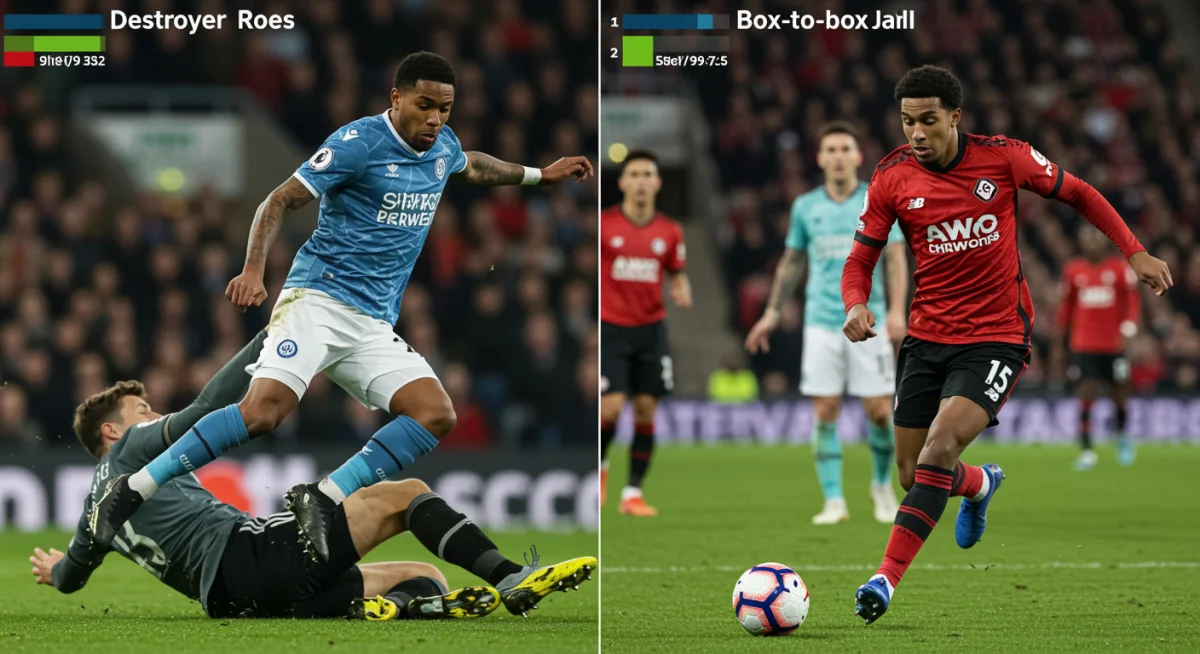
The Destroyer of 2026 needs to be a master of defensive positioning, understanding when to step out, when to hold their ground, and how to screen passing lanes effectively. They must be physically robust, capable of covering large areas of the pitch, and possess the stamina to maintain their intensity throughout the entire match. Their ability to disrupt the rhythm of the opposing team is invaluable, making them a cornerstone for any aspiration of success. These are the unsung heroes, the foundational pieces of any team aspiring to feature elite midfielders 2026.
The Dynamic Box-to-Box Midfielder: The Engine Room
The Box-to-Box midfielder is the ultimate all-rounder, a player who contributes significantly in both defense and attack. They are the engines of the team, covering vast distances, winning tackles in their own half, and then driving forward to join the attack, often arriving late into the box to score or assist. In 2026, this role demands unparalleled stamina, exceptional work rate, and a versatile skill set that encompasses defensive solidity, creative passing, and goal-scoring instincts. They are the bridge between defense and attack, providing crucial support in every phase of play.
Key Performance Metrics for Elite Box-to-Box Midfielders:
- Distance Covered per 90 Minutes: A direct measure of their work rate and stamina, often among the highest in the team.
- Progressive Carries: How often they carry the ball forward into dangerous areas, demonstrating their ability to drive play.
- Tackles Won and Interceptions per 90 Minutes (Combined): Indicative of their defensive contributions across the pitch.
- Expected Goals (xG) per 90 Minutes: While not strikers, elite box-to-box midfielders get into good scoring positions.
- Shots on Target (%): Shows their accuracy when they do get opportunities in front of goal.
- Key Passes and Chances Created per 90 Minutes: Their involvement in creating attacking opportunities.
- Ball Recoveries in Attacking Third: Highlights their ability to press high and win the ball back close to the opponent’s goal.
- Successful Dribbles (%): Their capability to navigate tight spaces and beat defenders in both halves of the pitch.
- Pass Completion Rate (Overall and Long Passes): They need to be accurate with both short, intricate passes and long, game-changing diagonals.
The box-to-box midfielder for 2026 must be a true athlete, capable of maintaining high-intensity bursts throughout the match. Their tactical awareness allows them to identify when to support the defense and when to surge forward, making them incredibly difficult for opponents to track. They are the heartbeat of the team, setting the tempo and providing energy in every facet of the game. When we speak of elite midfielders 2026, the box-to-box role embodies the modern demands for complete players.
Data-Driven Comparison: Unveiling the Nuances
While the descriptions above provide a qualitative understanding of each role, a data-driven comparison truly highlights the distinct profiles of these elite midfielders 2026. Let’s consider a hypothetical scenario where we compare top players in each category based on a selection of these advanced metrics. Imagine analyzing heatmaps that show a playmaker’s concentration in the middle and final third, a destroyer’s coverage in their own defensive third, and a box-to-box midfielder’s omnipresence across the entire pitch.
For instance, an elite Orchestrating Playmaker might boast a Progressive Pass Completion rate above 85% and 3+ Key Passes per 90 minutes, alongside a high xA. Their defensive numbers might be lower, perhaps 1-2 Tackles Won per 90, but their influence on attack would be undeniable.
In contrast, a top Tenacious Destroyer would likely exhibit 4+ Tackles Won and 3+ Interceptions per 90 minutes, with an Aerial Duels Won percentage exceeding 65%. Their passing might be less progressive, focusing on high completion rates of short passes to retain possession and initiate safe build-up.
The Dynamic Box-to-Box midfielder would present a more balanced, yet equally impressive, statistical profile. They might have 2-3 Tackles Won, 1-2 Interceptions, 1-2 Key Passes, and an xG of 0.15-0.25 per 90 minutes, all while covering over 12 kilometers in a match. This blend of metrics showcases their all-encompassing contribution.
These comparisons are not about declaring one role superior to another, but rather about appreciating the specialized contributions each brings to a team. The beauty of modern football lies in how these different profiles can be combined and leveraged to create a cohesive and formidable midfield unit. The data simply provides a clearer lens through which to observe their impact.
The Interplay of Roles: A Symbiotic Relationship
No single midfielder operates in a vacuum. The effectiveness of an Orchestrating Playmaker is often enhanced by the defensive solidity provided by a Tenacious Destroyer. Similarly, a Dynamic Box-to-Box midfielder can thrive by linking up with both, providing an outlet for the Destroyer and a supporting run for the Playmaker. The best teams in 2026 will be those that understand this symbiotic relationship and recruit players who complement each other’s strengths.
For example, a team with a deep-lying playmaker might pair them with a more aggressive box-to-box midfielder who can drive forward, knowing the playmaker will cover defensively. Conversely, a team relying on a high-pressing system might prioritize destroyers who can win the ball high up the pitch, feeding it to quick playmakers or box-to-box players to launch immediate attacks. The tactical permutations are endless, and the roles of elite midfielders 2026 are constantly adapting to these strategic choices.
Training and Development for Future Elite Midfielders
Given the increasingly specialized and demanding nature of these midfield roles, the training and development pathways for aspiring elite midfielders 2026 are becoming more targeted. Academies and clubs are employing advanced sports science, psychological conditioning, and highly specific tactical drills to cultivate players who can excel in these defined positions.
- For Playmakers: Training focuses on vision, passing technique (short, long, weighted), decision-making under pressure, spatial awareness, and press evasion techniques. Cognitive training to improve reaction time and anticipation is also crucial.
- For Destroyers: Emphasis is placed on defensive positioning, tackling technique, aerial prowess, reading the game, tactical discipline, and physical strength and endurance. Analytics are used to refine their interception and blocking patterns.
- For Box-to-Box Midfielders: Development involves a holistic approach, combining high-intensity endurance training, defensive drills, attacking runs, shooting practice, and transitional play. Their training regimes are often the most comprehensive due to the diverse demands of their role.
The integration of virtual reality (VR) and artificial intelligence (AI) in training is also set to become more prevalent by 2026, allowing players to simulate match situations and refine their decision-making in a controlled environment. This technological edge will further sharpen the skills of future elite midfielders 2026.
The Impact of Technology and Analytics on Midfield Performance
The role of data analytics in football has moved beyond mere statistics; it’s now integral to tactical planning, player recruitment, and performance optimization. For elite midfielders 2026, technology will provide an unprecedented level of insight into their game. Wearable GPS trackers, advanced video analysis software, and AI-powered performance platforms will offer real-time data on every touch, movement, and decision.
Coaches can use this data to identify patterns, pinpoint areas for improvement, and tailor training programs to individual player needs. For example, a playmaker’s pass selection can be analyzed to determine optimal passing lanes against different defensive setups. A destroyer’s positioning can be evaluated to ensure they are consistently in the most effective areas to break up play. A box-to-box midfielder’s energy expenditure can be monitored to optimize their workload and prevent injuries.
Furthermore, predictive analytics will likely play a more prominent role, allowing teams to anticipate opponent tactics and adjust their midfield strategies accordingly. This technological integration will not replace human intuition but will augment it, providing a deeper, more objective understanding of midfield dynamics. The players who can effectively translate this data into on-field performance will truly stand out as elite midfielders 2026.
Conclusion: The Future of Midfield Dominance
As football continues its relentless march forward, the midfield remains the beating heart of any successful team. The three tactical roles we’ve explored – the Orchestrating Playmaker, the Tenacious Destroyer, and the Dynamic Box-to-Box midfielder – represent the pinnacle of midfield specialization and versatility. Each role demands a unique combination of skills, physical attributes, and tactical intelligence, all quantifiable through advanced performance metrics.
The elite midfielders 2026 will be those who not only excel in their specific roles but also possess the adaptability to adjust to changing game situations and the intelligence to integrate seamlessly with their midfield partners. The interplay between these roles, supported by cutting-edge sports science and data analytics, will define the tactical battles of the future. As fans, understanding these nuances allows for a richer appreciation of the strategic depth and individual brilliance that graces the modern game. The future of football promises an even more refined and exciting display of midfield mastery, where every pass, tackle, and run is part of a grander, data-informed design.